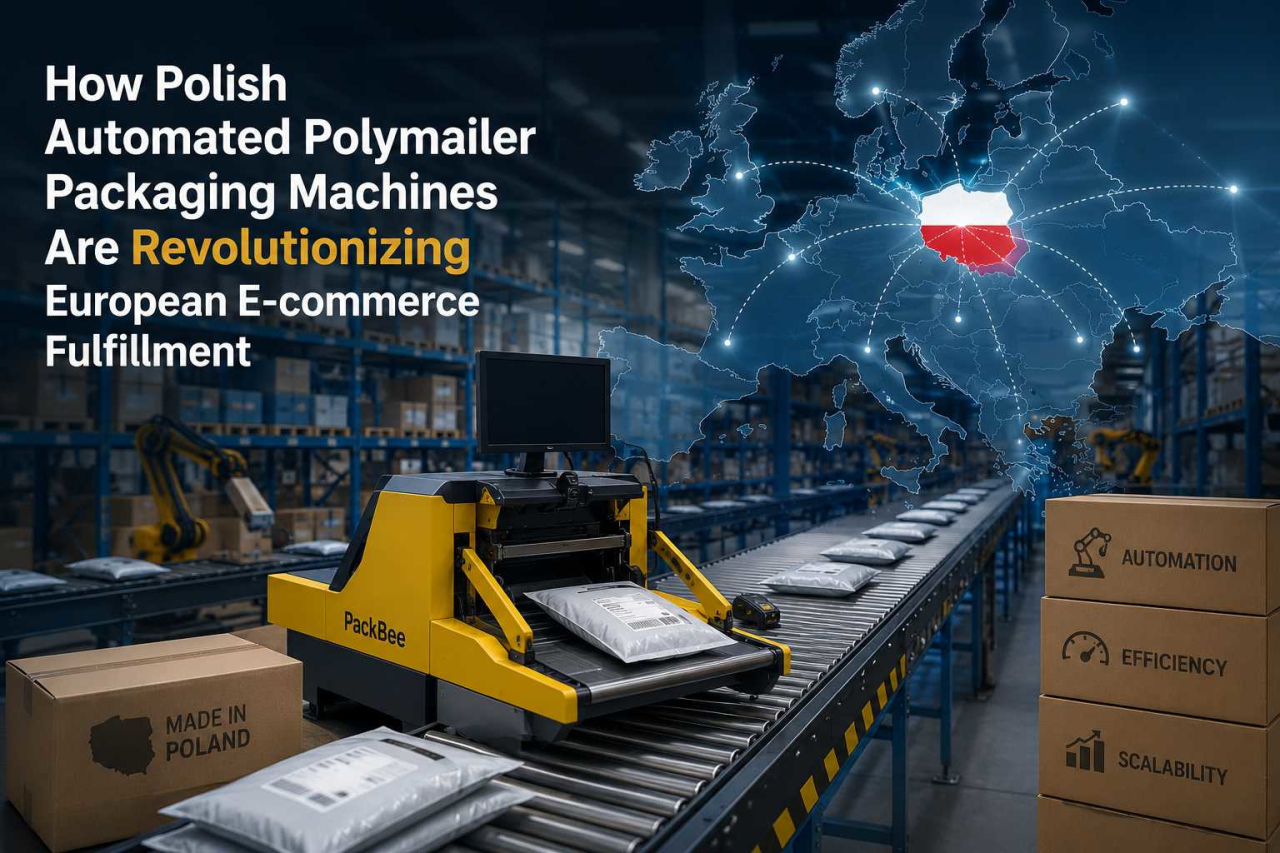
The widespread infrastructure of parcel lockers, highly automated courier sorting facilities, and a dense network of logistical connections have practically eradicated physical boundaries in retail trade. However, in the shadow of this spectacular success, behind the closed doors of distribution centers and online store warehouses, a critical problem has been smoldering for years. During massive sales peaks such as Black Friday, Cyber Monday, or the pre-Christmas rush, this underlying issue has driven thousands of entrepreneurs to the brink of operational paralysis.
This critical problem was, and in many places still is, the severe bottleneck at the parcel packaging line, commonly referred to as the out-bound zone. Despite massive capital investments in aggressive marketing, the deployment of state-of-the-art sales platforms, and even the implementation of advanced Warehouse Management Systems (WMS), the final step of the fulfillment process remained archaic. At the very end of the line stood a human being armed with a cardboard box, a roll of adhesive tape, and bubble wrap. This manual process, highly resistant to any form of algorithmic optimization, became the primary barrier to scaling domestic businesses. The breakthrough we are currently witnessing, however, did not arrive from Silicon Valley or German technological parks. The paradigm shift in courier shipments is being propelled by Polish engineering ingenuity. A Polish manufacturer of innovative automated poly mailer packaging machines is proving that advanced automation is the ultimate key to unlocking the full potential of the e-commerce sector and salvaging melting profit margins.
The Anatomy of a Logistics Crisis. Why the Old Model Had to Collapse
To fully comprehend the magnitude of the revolution brought about by automated packaging lines, we must first ruthlessly expose the fatal flaws of the traditional shipping model. For over a decade, the dominant method of securing goods was the use of corrugated cardboard boxes. Online retailers purchased massive stacks of cartons in several predefined sizes, hoping that these would cover the requirements for all possible combinations of customer orders. The truth turned out to be brutal. The e-commerce assortment is incredibly diverse. In one order, a customer buys a simple t-shirt; in another, a set of dietary supplements; and in yet another, a small, impact-resistant toy or GSM accessories already securely packaged by the manufacturer in a hard blister pack.
Forcing a warehouse worker to fit a small, soft, or flexible product into a rigid, often significantly oversized cardboard box generated massive losses on multiple operational levels. First and foremost: time. Assembling a die-cut box, filling the empty void with expensive protective materials (such as honeycomb paper or plastic air pillows), meticulously sealing it with tape, and finally manually applying the courier label is a process that takes even an experienced packer anywhere from 45 seconds to over a full minute. When dealing with a daily volume of ten thousand parcels, this processing time translates into the absolute necessity of hiring an army of manual laborers.
Secondly: transportation costs. The courier industry worldwide, including the leading players on the Polish market such as InPost, DPD, DHL, and GLS, has fully transitioned to a pricing model based on dimensional weight (volumetric weight). In an era focused on fuel optimization and reducing the carbon footprint, cargo space in a courier's delivery van is worth its weight in gold. Packing a small item into a large box is the literal definition of "shipping air." If a t-shirt occupies only ten percent of the volume of the box used, the online store is essentially paying the logistics operator to transport empty space. Furthermore, in the parcel locker system, a difference of just a few centimeters dictates whether a shipment qualifies as a cheap "Size A" or must be paid for as a significantly more expensive "Size B" or "Size C." When scaling this price difference across hundreds of thousands of transactions annually, we are looking at millions of zlotys in losses that directly burden the Polish entrepreneur's profit and loss statement.
Faced with mounting wage pressure, a drastic shortage of available manual labor in the logistics sector, and the skyrocketing costs of packaging materials, maintaining a manual packaging model for soft and crush-resistant products became operational suicide. The market desperately demanded a technology that would eliminate these problems at their very source.
Polish Automation Steps In. How Poly Mailer Machines Actually Work
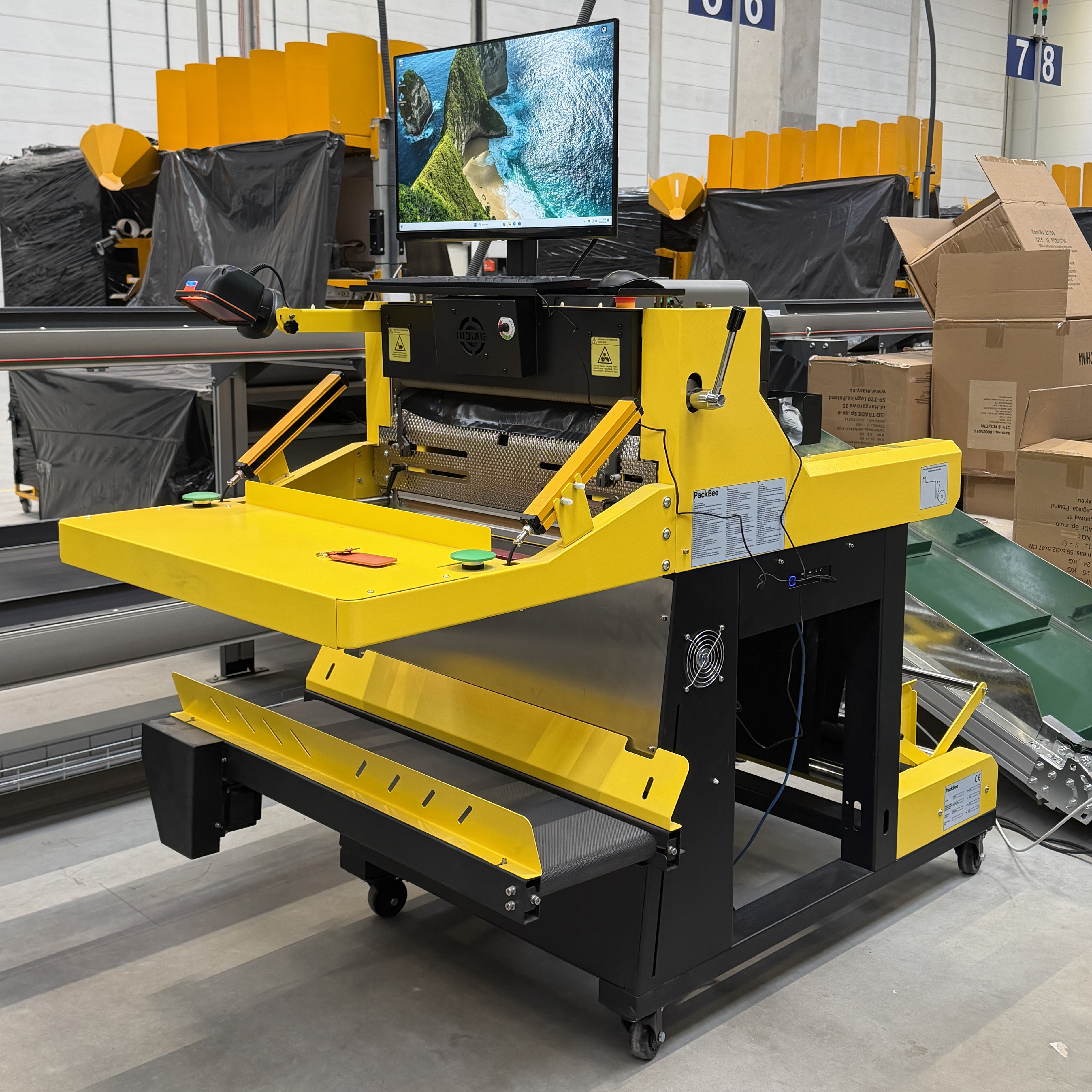
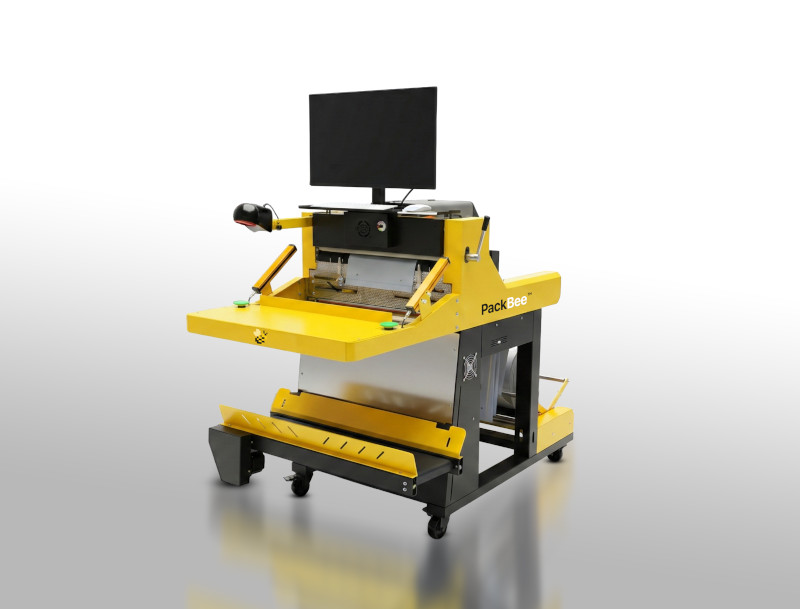
The definitive answer to these logistical nightmares came in the form of machines designed and manufactured by Polish engineering teams specializing in the construction of high-speed, reliable, and deeply integrated poly mailer packaging systems. We are not talking about simple tape dispensers or primitive manual heat sealers. We are discussing powerful, industrial-grade equipment that transforms the final stage of the warehouse process into an automated factory of extraordinary throughput.
The entire process resembles a perfectly oiled watch mechanism, but one that is governed by complex algorithms and advanced vision systems. It begins the moment a picking zone employee, operating on optimized routing paths dictated by the WMS, places the gathered merchandise (for example, apparel, home textiles, small electronics, or cosmetics) onto the machine's infeed conveyor belt. From that exact second, human intervention ceases entirely.
An array of sophisticated sensors and optical light curtains immediately scans the three-dimensional outline of the approaching item. In fractions of a second, the machine calculates the exact volume and dimensions of the product. Simultaneously, an internal barcode scanner reads the order identifier and communicates via API with the central warehouse IT system. It verifies the completeness of the order and triggers an asynchronous request to generate a waybill with the appropriate courier operator.
Next, the core packaging module springs into action. The machine is fed by an endless roll of highly durable, heat-sealable film. Based on the precise measurements from the optical scanner, the device pulls the exact required amount of material, wrapping it around the product as tightly as physically possible without damaging the contents. This creates a sort of "second skin" for the merchandise. In a split second, precision thermal sealing jaws are activated. They cut the perfectly sized poly mailer and create a hermetic seal that provides 100% protection against moisture, dirt, and unauthorized opening attempts during transit.
Just before the finished parcel exits the machine, an integrated print and apply mechanism retrieves the courier label that was generated literally a second prior, flawlessly applying it to the flat surface of the poly mailer. All of this occurs dynamically, without halting the conveyor belt. The packaged, secured, and labeled parcel rolls off the conveyor directly into a collection bin or onto an automated sorter that routes the traffic to the correct loading docks for specific carriers.
The operational tempo of such an installation is staggering when compared to manual labor. A Polish automated packaging machine can form, seal, and label anywhere from several hundred to over a thousand parcels per hour, depending on the specific assortment and line configuration. To achieve this level of throughput using traditional methods, a dozen or more highly skilled packers would need to crowd around massive packing stations, occupying vast amounts of valuable operational floor space.
The Mathematics of Profit. Why the Investment in Poly Mailers Pays Off So Quickly
Business leaders do not implement automation out of a sheer love for technology; they deploy it to fiercely defend their finances and build an unassailable market advantage. The Return on Investment (ROI) for purchasing a Polish automated poly mailer packaging line is frequently achieved in under twelve months. This rapid payback period is driven by several highly potent optimization factors.
The first factor is the drastic reduction in the cost of the packaging material itself. Purchasing a high-quality corrugated cardboard box is an expense ranging from several dozen groszy to over a zloty per unit. To this, one must add the cost of adhesive tape and expensive void fillers. In the case of an automated machine, the unit material cost is solely the segment of film cut exactly to the product's dimensions. This means absolutely zero waste and no unnecessary consumption of raw materials. The cost of packaging an item in a custom-fit poly mailer is, on average, 60% to 80% lower than packing that same assortment into a fitted cardboard box.
The second massive generator of savings is the reduction in logistics service fees. An automated poly mailer, tightly wrapping a soft product like a fleece hoodie, allows for a radical flattening of the shipment's dimensions. An item that would have required a medium-sized locker compartment (Size B) when packed in a box can effortlessly fit into the smallest locker (Size A) when shipped in a poly mailer. Saving a few zlotys on a single waybill, multiplied by ten thousand shipments a month, generates tens of thousands of zlotys of pure capital that remains securely within the company. Additionally, couriers picking up goods from the warehouse can load significantly more spatially optimized poly mailers into their vehicles than rigid, awkwardly shaped boxes. This streamlines the injection of parcels into the courier network and minimizes the risk of shipments being left behind due to a lack of cargo space during the frantic holiday season.
The third aspect is the reclamation of invaluable warehouse space. Storing hundreds of thousands of flat-packed cardboard boxes in a dozen different dimensional variants consumes an immense number of pallet locations. A pallet location in a modern (A-class) logistics center represents a concrete, recurring lease cost. The automated machine is fed by rolls of film that are incredibly densely wound. A single pallet of film rolls replaces, in terms of volume, an entire delivery truck filled with empty cardboard boxes. The warehouse space freed up in this manner can be immediately repurposed to expand the active picking zone (pick-face), allowing the business to broaden its commercial assortment and boost revenue without the crippling expense of renting a larger facility.
B2B and Omnichannel: The Evolution of Supply Chains and Packaging Machines
It is crucial to note that this revolution is not confined exclusively to classic B2C (Business to Consumer) e-commerce. Today's retail landscape is deeply integrated. Online stores increasingly operate on models that bypass the necessity of maintaining massive proprietary warehouses. Instead, they outsource shipping to external fulfillment hubs or leverage the resources of modern wholesale platforms. In this interconnected environment, seamless and reliable B2B goods distribution for e-commerce becomes absolutely crucial. Wholesalers and distributors who execute dropshipping on behalf of their retail partners must process thousands of individual orders daily. They can no longer treat these as classic palletized deliveries; they must handle them as individual B2C courier parcels for the end consumer.
For such a B2B distributor, transitioning to automated poly mailer packaging machines is a matter of strategic survival. A traditional wholesale facility is architecturally ill-equipped to pack single t-shirts, video games, or cosmetics with such high frequency. Deploying an automated line allows for the flawless integration of wholesale logistics with the rapid-fire demands of retail commerce. It provides e-commerce partners with an ironclad guarantee that their merchandise will be packed instantly and aesthetically, strictly adhering to aggressive cut-off times (the final hour an order must be placed to guarantee same-day dispatch).
Demand Shocks and the New Era of Sales. Why Manual Packing is a Relic of the Past
The digital commerce ecosystem is currently undergoing another massive transformation, one that tests the resilience of logistics infrastructure to its absolute limits. Classic promotional campaigns are making way for hyper-dynamic market phenomena. Gigantic spikes in server loads and order volumes are no longer exclusive to the fourth quarter. Contemporary analytical tools and innovative customer acquisition channels can generate an entire month's worth of sales in a mere matter of hours. These events mercilessly expose all the vulnerabilities of slow, manual packing zones.
Retail enterprises in Poland and across Europe are bracing for the impact of trends driven by instant gratification and extreme consumer impulsivity. It is blatantly clear that traditional procedures stand absolutely no chance of succeeding when confronted with the extreme dynamics of business models such as live commerce and the upcoming TikTok Shop. Imagine a live video broadcast watched simultaneously by one hundred thousand people. The host presents a limited-edition clothing line or an innovative cosmetic gadget. In a fraction of a second, upon a strong call to action, ten thousand consumers click "Buy Now." The sales platform's servers, built on highly elastic cloud infrastructure (autoscaling), handle this tsunami of traffic without blinking an eye. Payments are processed in the background, and orders are instantly logged.
But this digital magic comes to an abrupt halt at the interface with physical infrastructure. The IT system suddenly dumps ten thousand picking orders onto the warehouse terminals. If your facility relies on manual cardboard packing, you have just bought yourself a multi-day operational bottleneck, exhausted and frustrated employees, and dozens of negative reviews from customers who expected immediate fulfillment.
An automated, Polish-engineered poly mailer packaging line absorbs such "flash volumes" without breaking a sweat. A machine does not suffer from fatigue, does not require a coffee break, and does not make errors due to exhaustion. Operating with a nominal throughput of a thousand parcels per hour per shift, it can clear a massive post-live-commerce order spike smoothly and predictably. Algorithmically assigned picking paths direct the merchandise to the conveyor, and the device methodically cuts, seals, and labels, feeding ready-to-ship parcels directly to the waiting courier trucks. From a strategic business perspective, this immunity to demand shocks allows e-commerce directors to freely design aggressive, high-converting marketing campaigns without the paralyzing fear that the operations department will collapse during execution.
IT Integration. The Digital Mind of the Polish Machine
It is worth dedicating focused attention to how this technology integrates into the enterprise's IT architecture. The success of the Polish manufacturer does not rest solely on precision metalworking, reliable pneumatic actuators, or robust mechanical components. The true key lies in advanced control software and an open Application Programming Interface (API) architecture.
Deploying such an automaton in a modern warehouse is fundamentally an IT project, not merely an equipment purchase. The machine is plugged in as a critical decision node on the company's main data bus. When an item travels along the conveyor, the machine's scanner retrieves the full context of the order from the central WMS. It is precisely at this stage that highly critical quality control occurs. If a human picker made an error and placed the incorrect number of items on the belt, the machine's software will detect the discrepancy against the digital picking list. Instead of packing the flawed order, it diverts that specific assortment to an emergency side track (a reject lane) for manual auditing, thereby preventing a costly customer complaint and return process.
Simultaneously, the courier label generation process takes place in milliseconds. The software integrates directly with the Web Services of logistics operators such as InPost ShipX, DPD API, or GLS. The data payload sent by the machine includes the dynamically calculated weight from the built-in scale and the precise 3D dimensions calculated by the light curtains. The courier receives perfectly accurate volumetric data in their system, permanently eliminating later, highly painful financial revisions of waybills and penalties for underestimating parcel weight. Subsequently, the carrier's server returns a code in ZPL (Zebra Programming Language) format, which is instantly buffered and printed with surgical precision onto the speeding poly mailer.
The Ecological Aspect. Busting Myths About Plastics in E-commerce
Whenever a discussion arises regarding the shift towards flexible film packaging, questions regarding ecology inevitably surface almost immediately. Many consumers and entrepreneurs, influenced by superficial marketing slogans, operate under the assumption that cardboard is inherently "green" and plastic is inherently "toxic." However, a rigorous, engineering-grade environmental analysis based on Life Cycle Assessment (LCA) reveals a significantly more complex, and frankly, shocking reality.
First of all, top-tier Polish packaging machines utilize highly innovative consumable materials. The primary raw material is no longer virgin plastic derived directly from petroleum refining. Manufacturers utilize high-grade PCR (Post-Consumer Recycled) film, consisting of 80%, and frequently 100%, recycled materials that are fully recyclable again (recycling code LDPE 04).
Let us now focus on the energy balance. Manufacturing a single cardboard box, which consists of roughly 90% cellulose (even if sourced from recycled paper), consumes astronomical quantities of water and energy during the pulping, pressing, and drying processes. This rigid, hollow box is then transported on pallets to the warehouse. As established earlier, packing a soft item in an oversized box means wasting precious cargo space in a delivery truck.
If delivering one thousand t-shirts packed in oversized boxes requires two courier vans, while delivering that same thousand t-shirts tightly wrapped by an automated machine in eco-friendly, recycled poly mailers requires only half the cargo volume of a single van, the savings in carbon dioxide (CO2) emissions from transport alone drastically outweigh the carbon footprint associated with producing thin, recycled film. Furthermore, cardboard boxes are frequently secured by warehouse workers using non-recyclable, reinforced acrylic tape, making proper disposal by the end consumer highly problematic. A machine-sealed poly mailer is completely free of foreign binders or adhesives. From both an ecological and operational standpoint, a precisely measured and cut PCR poly mailer, which completely eliminates the phenomenon of "shipping air," is currently one of the most environmentally and economically sound methods of optimizing the last-mile supply chain in the e-commerce sector.
Operational Independence in an Extremely Tough Labor Market
In any serious debate about automation, we cannot overlook the foundation of every business: human resources. The Polish economy, despite temporary inflationary fluctuations, maintains structurally very low unemployment. This translates to an incredibly strong employee's market, which is particularly severe in metropolitan areas surrounded by logistics parks (such as Warsaw, Łódź, Poznań, Wrocław, and Silesia).
Hiring a sufficient number of warehouse workers to handle the fourth-quarter rush has become a military-grade operation and a source of immense stress for HR departments. Even when temp agency workers are secured, the massive investments in training them evaporate the moment their short-term contracts end. A temporary worker at a packing station, operating under crushing time pressure and aggressive productivity quotas dictated by the WMS, makes a multitude of errors. They use too much filler, apply the wrong labels, or sloppily secure the carton. This inevitably leads to a wave of costly returns and complaints that severely undermine trust in the retailer's brand.
Polish automated poly mailer machines drastically alter the work environment. They eliminate tedious, physically demanding, and repetitive tasks (such as folding thousands of sheets of cardboard daily at packing stations), shifting the burden entirely onto the mechanical throughput of the conveyor line. For the company's executive board, this means complete decoupling of the warehouse's output capacity from the local labor market, seasonal staffing fluctuations, sick leaves, and the exorbitant non-wage costs of recruitment. Instead of hiring fifty temporary workers for the Black Friday week, the operations manager simply switches the automated line to a two- or three-shift schedule. The employees who were previously tethered to packing tables can be reallocated to far more valuable and complex roles, such as resolving warehouse inventory anomalies, managing complicated technical returns, or staffing the inbound receiving section—an area that chronically suffers from severe staff shortages during peak seasons.
A Future Built on Automated Advantage
The revolution spearheaded by the Polish manufacturer of automated poly mailer packaging machines serves as a textbook example of how deep, specialized engineering can resolve the most swelling problems of the modern digital economy. By replacing inefficient, sluggish, and error-prone manual labor with a hyper-precise system of scanners, conveyors, thermal sealers, and IT interfaces, they have altered more than just a logistical process. They have fundamentally rewritten the mathematics of e-commerce itself.
Entrepreneurs have gained a formidable weapon to combat escalating courier fees, the inflation of raw material prices, and unrelenting wage pressure. This technology empowers Polish distributors, retail stores, and B2B wholesalers to operate at a level of efficiency that until very recently was strictly reserved for global marketplace titans. The ability to absorb extreme order spikes, rapidly adapt to disruptive trends like live commerce, aggressively flatten volumetric shipping costs, and maintain the highest ecological standards through the use of recycled materials positions Polish automation as an indispensable component of the modern business landscape.
In today's uncompromising reality, marked by a fierce battle for every single consumer and every fraction of a margin, companies that reject the modernization of their out-bound zones and stubbornly cling to the illusion of infinitely scalable manual labor are condemning themselves to slow but certain marginalization. The deployment of automated poly mailer packaging has ceased to be an innovative curiosity. It has firmly established itself as an absolute operational standard, a strict prerequisite for maintaining competitiveness in the ruthless, fast-evolving world of the twenty-first century. Domestic technical ingenuity has once again proven that it can set global trends right at the intersection where mechanics, advanced software programming, and hard, uncompromising business pragmatism meet.