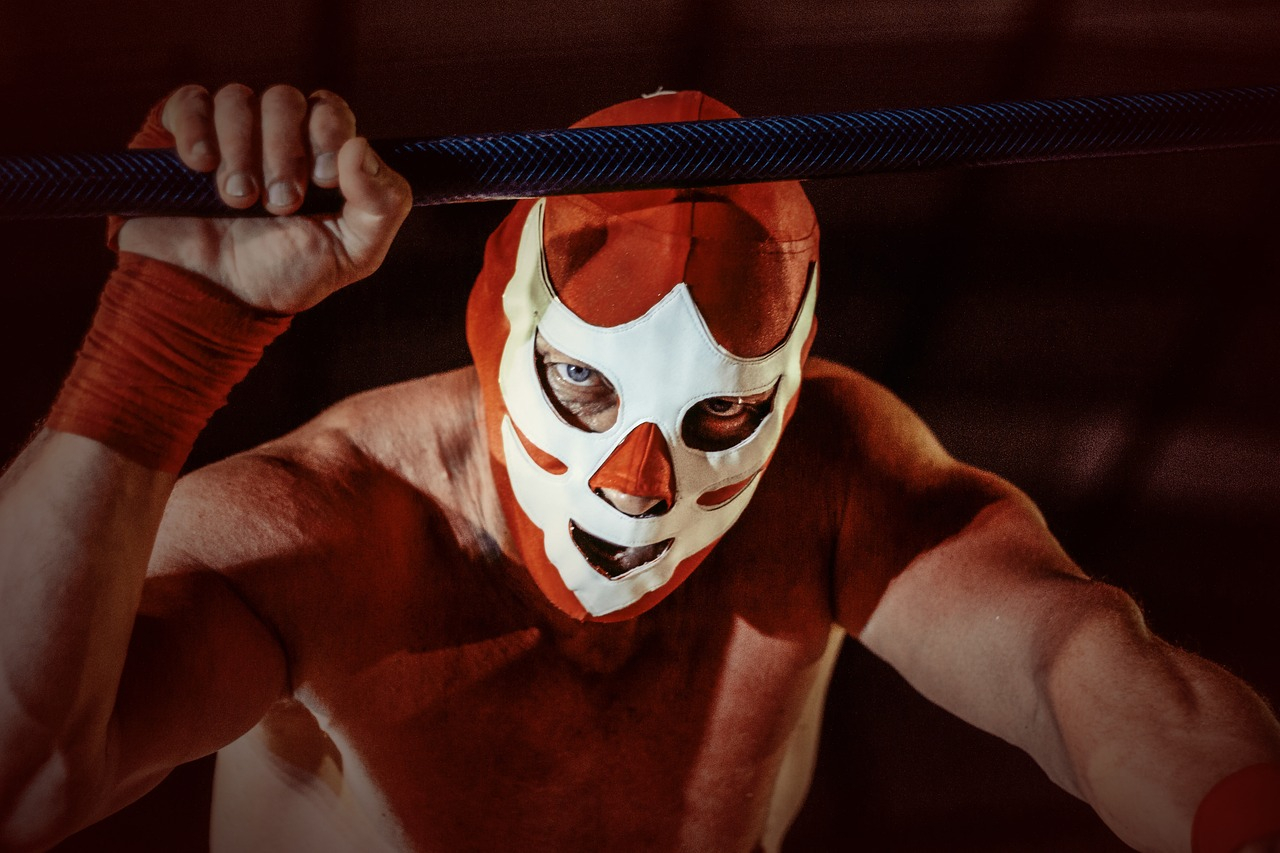
Those matches matter because Raw has always been more than a weekly stop on the road to a premium event. At its peak, the show delivered title changes, long main events, technical showcases and rivalry chapters that pushed the entire industry forward. Readers who want broader context can also look at why wrestling matches attract millions of viewers worldwide, because Raw is one of the clearest examples of how television wrestling creates attachment, memory and repeat viewing.
Raw also changed how fans consume wrestling. Great matches now live on through replays, clips, streaming libraries and YouTube searches. That is why articles about the best streaming platforms to watch wrestling matches online have become part of modern fan culture. A classic Raw match no longer disappears after one broadcast. It becomes part of wrestling history almost immediately.
TABLE OF CONTENTS:
John Cena vs Shawn Michaels on Raw in London in 2007
John Cena vs CM Punk on Raw in Dallas in 2013
Triple H vs Chris Jericho on Raw in 2000
John Cena vs Rob Van Dam vs Edge on Raw in 2006
Other great Raw matches and why they mattered
What made Raw matches feel bigger than weekly television
FAQ
John Cena vs Shawn Michaels on Raw in London in 2007
John Cena vs Shawn Michaels on the April 23, 2007 edition of Raw stands near the top of any serious list of the best Raw matches ever. WWE’s own historical ranking placed it at number two among Raw’s greatest matches, and the company’s coverage of the bout stressed that it lasted the entire second hour of the show. That point matters because it explains why the match still feels special. Raw almost never gave that much uninterrupted space to one non-title television main event.
The match worked because it felt like a pay per view rematch with no television shortcuts. Cena had already defeated Michaels at WrestleMania 23, so the rematch carried real narrative weight. Michaels entered with the urgency of a man trying to prove the previous result was not final. Cena entered with the burden of defending his status as champion even in a non-title setting. The London crowd gave the bout its extra voltage. Earls Court was loud, engaged and fully invested in every reversal.
The structure was simple and smart. Michaels targeted openings and timing. Cena kept returning with power, stamina and clean transitions into his biggest spots. The bout moved around ringside, slowed down when needed and then built again. That rhythm made the closing minutes hit harder. WWE’s recap noted Cena shouting that Michaels would not stay down. That line captured the feel of the match. It was not only long. It was exhausting, even on screen.
The finish still stands out. Cena looked close to winning with the Attitude Adjustment, but Michaels escaped and landed Sweet Chin Music for the pin. It was a clean television finish over the reigning WWE Champion. That alone made the match memorable. It also helped Cena, because losing after hanging with Michaels for nearly an hour made him look tougher, not weaker.
Watch John Cena vs Shawn Michaels on YouTube
- It lasted the entire second hour of Raw
- It followed a WrestleMania main event level rivalry
- The crowd stayed hot from start to finish
- The finish was decisive and memorable
For many fans, this is still the model Raw main event. Big names. Real stakes. Long-form pacing. No throwaway ending. If you want a match that explains why weekly wrestling television can still feel essential, this is one of the first bouts to study.
John Cena vs CM Punk on Raw in Dallas in 2013
John Cena vs CM Punk on the February 25, 2013 edition of Raw is another television match that felt much bigger than its slot on the card. WWE billed it as a number one contender’s match for the right to face The Rock at WrestleMania 29. That gave the contest immediate gravity. It was not just another chapter in a rivalry. It was a route into the biggest match on the biggest show of the year.
This match succeeded because both men arrived with history, chemistry and a clear competitive purpose. Cena and Punk had already built one of WWE’s defining rivalries of the modern era. Their earlier clashes had set a high bar, and this Raw main event met it by leaning into technical counters, submission exchanges and a big-match pace. WWE’s recap described it as a grueling contest that ran nearly half an hour. That length mattered because it allowed the rivalry to breathe rather than rush to a finishing sequence.
Punk wrestled with urgency and control. Cena answered with power and patient counters. The key difference was how balanced the match felt. Neither man dominated for long. Instead, the bout kept turning through holds, strikes, escapes and signature sequences. Punk cut off Cena’s standard bursts. Cena had to adapt on the fly. That gave the match a sporting feel that helped it stand apart from more formulaic television main events.
The submissions were especially important. Cena and Punk traded serious attempts to end the match on the mat, which deepened the sense that both men were trying every possible route to victory. That also matched the story. The prize was too important for either man to rely only on routine finishing offense. By the time Cena hit the Attitude Adjustment for the pin, the result felt earned.
Watch John Cena vs CM Punk on YouTube
- The WrestleMania main event opportunity gave the match real stakes
- The rivalry already had deep history before the bell rang
- The pacing mixed striking, mat work and finishing counters well
- The result felt clean and decisive on a major episode of Raw
It also helped show why Cena and Punk remain such strong names for search traffic and replay value. Their best matches rarely felt accidental. They felt constructed with purpose. That is a major reason they continue to appear in discussions about the most spectacular wrestling matches in history.
Triple H vs Chris Jericho on Raw in 2000
Triple H vs Chris Jericho on the April 17, 2000 edition of Raw remains one of the most important television matches of the Attitude Era. WWE later highlighted it among the best world title matches ever, even though the result was eventually erased because of the second referee controversy. That twist is exactly why the bout became so memorable. It gave fans a major surprise without asking them to forget the emotional payoff.
Jericho’s apparent title win mattered because it told viewers that Raw could still shock them in the middle of a weekly broadcast. At that point Jericho was still transitioning into the true main event mix. He had charisma and crowd connection, but there were still doubts around whether WWE fully saw him as a championship level act. Beating Triple H, even briefly and controversially, changed how fans saw him. The reaction in the building told the whole story. The audience was ready to believe.
The match itself had the right tone for the period. Triple H worked with control and arrogance. Jericho answered with energy, speed and timing. The Lionsault finish gave the bout a clean visual climax before the controversy reset the title picture. That protected Triple H in storyline while also giving Jericho the most important symbolic moment of his WWE run to that point.
There is another reason this match matters historically. Raw in 2000 was fiercely competitive television. Angles moved fast. Segments mattered. Main events had to land. A fake-out title change only worked if the match before it was strong enough to make the audience believe it. This one was.
Watch Triple H vs Chris Jericho on YouTube
Its legacy was bigger than the official record book. WWE later noted that the crowd reaction made it clear the audience was ready to embrace Jericho as champion. That is the true value of the match. It changed perception. Not every great television bout does that.
John Cena vs Rob Van Dam vs Edge on Raw in 2006
The July 3, 2006 Raw main event between John Cena, Rob Van Dam and Edge deserves more attention whenever fans rank Raw’s best matches. It brought together three very different performers at an important moment in WWE’s title scene. Cena was the centerpiece champion figure. Rob Van Dam carried the energy of a fresh title run and strong fan support. Edge was the opportunist who could change any match by changing the rhythm.
The match stood out because every participant brought a different style, which made the action feel unstable in the best possible way. Triple threats can become messy. This one stayed urgent. Cena provided the power base. Van Dam added unpredictability and aerial offense. Edge injected timing, shortcuts and fast momentum swings. That blend gave the match movement all the way through.
The bout also mattered because it reflected how strong Raw’s title programs could look outside pay per view. A weekly television audience got a main event with championship level stakes, recognizable stars and enough chaos to hold attention through every phase. Matches like this are one reason WWE has long treated Raw as a place for business, not only build.
The finishing exchanges were especially useful for television. A triple threat allows interruption at any time, so every near fall feels less secure. That helps on a weekly show because it keeps casual viewers from drifting. The match also served as a strong example of how one title program can support several characters at once.
Watch Cena vs Rob Van Dam vs Edge on YouTube
For fans interested in how weekly wrestling grew into a larger commercial machine, this kind of star-packed Raw main event fits naturally with the wrestling ticket market and major live events worldwide. Television makes stars. Stars sell the buildings later.
Other great Raw matches and why they mattered
Any serious list of Raw classics also needs room for several other bouts that helped define the brand at different stages. Not all of them had the same long-match prestige as Cena vs Michaels or Cena vs Punk. Some mattered because of timing. Some because of stipulation. Some because they showed how much WWE trusted a weekly show.
One strong example is John Cena vs Chris Jericho on Raw in August 2005 in the You’re Fired match period. It blended title stakes with storyline consequences and gave Cena a main event that felt sharper than a standard defense. Another is John Cena vs Triple H on Raw in October 2009, a match WWE itself later highlighted among Cena’s most notable bouts because it carried larger career implications around his place on the show.
Raw has also benefited from women’s matches and mixed-era spectacle. A full history cannot stay locked in one style. If you want a broader lens beyond the men’s division, the best female wrestling of all time adds important context to how television wrestling expanded over time.
| Match | Year | Why it mattered | YouTube |
|---|---|---|---|
| John Cena vs Shawn Michaels | 2007 | A near-hour television classic with a clean finish | Watch |
| John Cena vs CM Punk | 2013 | A WrestleMania number one contender match with major rivalry history | Watch |
| Triple H vs Chris Jericho | 2000 | A shock title result that elevated Jericho instantly | Watch |
| John Cena vs Rob Van Dam vs Edge | 2006 | A high-level triple threat with contrasting styles and title stakes | Watch |
| John Cena vs Chris Jericho | 2005 | It added career consequences to a WWE title television match | Watch |
| John Cena vs Triple H | 2009 | A big TV singles match with strong headline value | Watch |
What usually separates a great Raw match from an average one
- A real reason for the match to exist beyond filling time
- Top level names or rising stars with clear momentum
- A finish that matters and is remembered
- A crowd that sounds like it knows it is watching something important
- Enough time for the bout to build properly
What made Raw matches feel bigger than weekly television
The best Raw matches rarely succeeded by accident. They had ingredients that gave them scale. First came context. A great Raw main event usually sat inside a strong rivalry or title picture. Second came trust. WWE had to let the wrestlers go long enough to create peaks, valleys and real tension. Third came crowd recognition. Fans had to sense that this was not a disposable segment.
When Raw committed time, stars and consequences to one match, the show often produced something that fans treated like an event rather than just an episode. That is why the best television bouts on the brand still hold replay value. They are not interesting only as history. They are enjoyable now.
There is also a practical reason these matches matter in hindsight. Raw has been one of the central engines of wrestling fandom for decades. It shaped how viewers planned their week, talked online and even travelled for major events. Readers interested in the wider culture around that habit can also explore the lifestyle of pro wrestling fans and global fan culture. Great Raw matches helped create that culture.
| Factor | Why it mattered on Raw | Effect on viewers |
|---|---|---|
| Time allocation | Longer matches allowed real pacing and drama | Fans saw the bout as major, not routine |
| Storyline stakes | Number one contender spots and titles raised urgency | Viewers stayed engaged to the finish |
| Star power | Big names made the match feel important before the bell | Casual viewers were less likely to tune out |
| Clean finishes | They gave TV matches replay value and credibility | Fans remembered the outcome clearly |
| Hot crowds | Loud reactions turned good action into a full event atmosphere | The match felt larger than television |
That combination also explains why great Raw matches are useful for new fans. They provide compact history lessons. Someone does not need to watch every episode from a full era to understand what made Cena, Michaels, Punk, Jericho, Triple H or Edge important. One outstanding Raw match can communicate all of that in under an hour.
- Pick a match with clear stakes
- Watch the entrances and crowd reaction closely
- Note how the early minutes establish pace and strategy
- Track which turning points change the momentum
- Judge whether the finish feels earned and memorable
That viewing method works especially well with Raw because television wrestling has no time to hide weak structure. A great match on pay per view can sometimes lean on spectacle. A great Raw match has to seize attention quickly and keep it. When it does, the result can be timeless.
The best WWE Raw matches in history were not just strong bouts on free television. They were statements about what the show could be when everything aligned. Big stars. Real stakes. Hot crowds. Proper time. Clean, meaningful finishes. That is why fans still return to them, why they still rank highly in WWE’s own retrospective lists and why Raw’s legacy remains tied not only to promos and debuts, but also to genuine in-ring classics.
Key points to remember
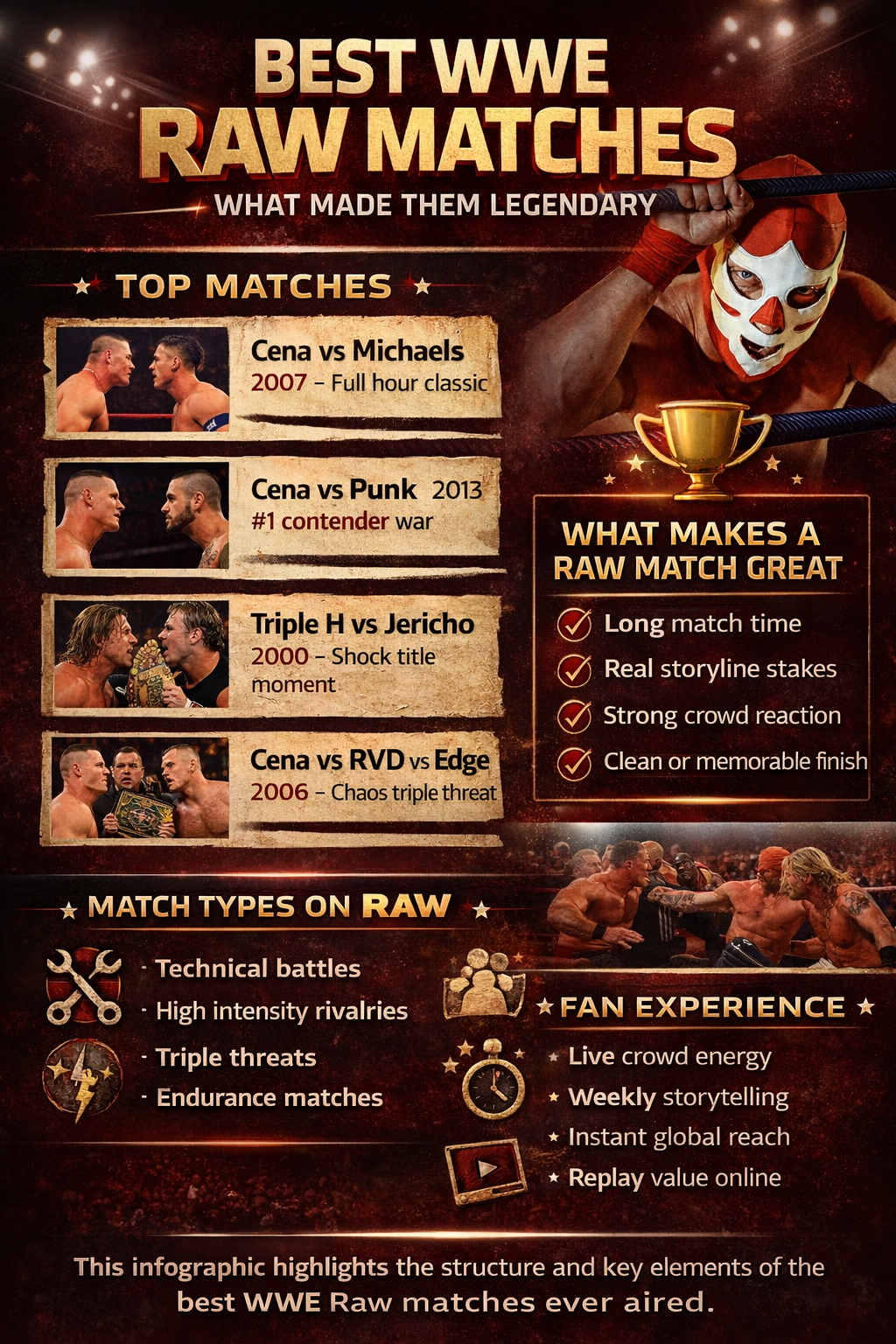
- John Cena vs Shawn Michaels in 2007 remains one of Raw’s defining classics
- John Cena vs CM Punk in 2013 gave weekly TV a WrestleMania level feel
- Triple H vs Chris Jericho in 2000 changed how fans viewed Jericho
- Great Raw matches usually had real stakes and real time
- Television classics helped build fan loyalty and replay culture
- Clean finishes often made Raw matches more memorable
- Weekly TV could still produce bouts with long-term historical value
FAQ
What is often considered the best WWE Raw match ever?
John Cena vs Shawn Michaels from Raw in London in April 2007 is one of the strongest candidates because of its length, clean finish and long-term reputation.
Why do Raw matches matter if pay per views are bigger?
Raw matches matter because they shape weekly fan interest, advance rivalries and sometimes deliver title changes or main event level contests on regular television.
Was John Cena vs CM Punk on Raw really that important?
Yes. It decided the WrestleMania 29 challenger to The Rock and brought major rivalry history into a long television main event.
Why is Triple H vs Chris Jericho from 2000 remembered so strongly?
Because Jericho appeared to win the WWE title on Raw, the crowd reaction was huge and the match helped move him closer to the true main event level.
How should a new fan start watching classic Raw matches?
Start with bouts that had clear stakes, top stars and strong finishes. Cena vs Michaels and Cena vs Punk are two of the safest starting points.
The best WWE Raw matches in history proved that Monday night television could produce classics, not only setup segments. They rewarded viewers with major performances, meaningful finishes and real replay value. That is why the strongest Raw matches still matter to fans, search traffic and wrestling history today.
Sources used for this article include WWE.com historical rankings of Raw’s greatest matches, WWE.com event recaps for Raw on April 23 2007 and February 25 2013, WWE.com retrospective lists on John Cena’s greatest matches, and WWE.com historical features on major world title matches and championship changes on Raw.