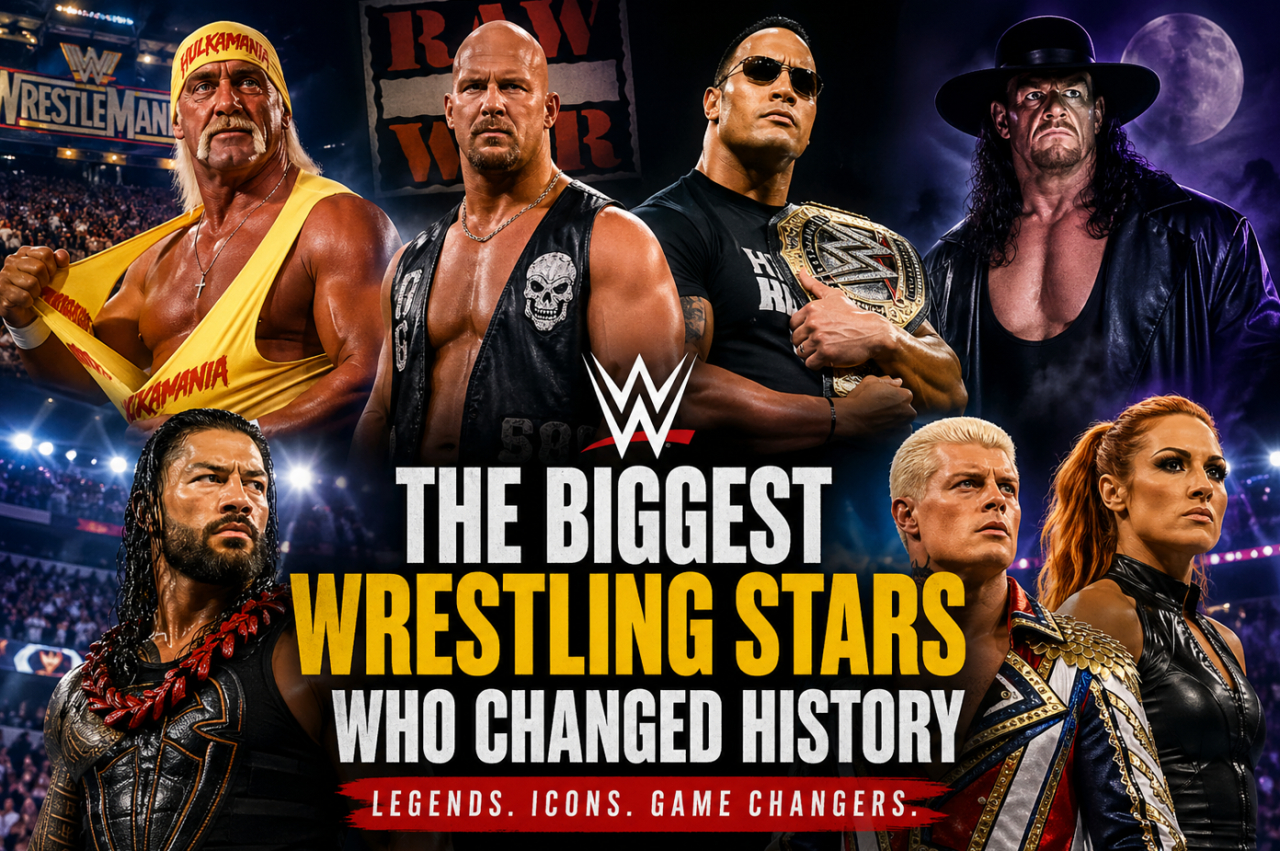
From the territorial era to global streaming dominance, the evolution of wrestling is directly tied to the rise of iconic performers. Their careers explain how professional wrestling expanded into global spectacles and why millions continue to follow the industry.
Modern audiences still revisit their matches through digital platforms. Fans often watch wrestling online to understand how these stars shaped the industry.
TABLE OF CONTENTS:
Hulk Hogan and the global expansion of WWE in the 1980s
Stone Cold Steve Austin and the Attitude Era revolution
The Rock and the transition to global entertainment
The Undertaker and the creation of long-term storytelling
Modern era stars and global wrestling dominance
FAQ
Hulk Hogan and the global expansion of WWE in the 1980s
Hulk Hogan became the central figure of wrestling’s first global boom during the 1980s. His role in WrestleMania events helped turn the promotion into a mainstream brand.
WrestleMania I in 1985 marked a turning point. The event combined celebrity culture and wrestling in a single broadcast. Hogan’s popularity drove pay-per-view growth and merchandise sales.
- Headlined multiple early WrestleMania events
- Expanded wrestling visibility on cable television
- Attracted mainstream media attention
- Helped define the hero character archetype
His matches remain central to discussions about the biggest wrestling events ever produced.
Stone Cold Steve Austin and the Attitude Era revolution
Steve Austin changed wrestling in the late 1990s by introducing a rebellious anti-hero character that reshaped audience expectations.
The Attitude Era saw record television ratings. Weekly shows like Raw dominated cable viewership. Austin’s rivalry with Vince McMahon became one of the most watched storylines in wrestling history.
His presence coincided with a shift in tone. The content became more aggressive and aimed at adult audiences. This strategy helped WWE outperform competitors during the Monday Night Wars.
- Multiple-time world champion
- Central figure in the highest-rated TV segments
- Expanded wrestling’s appeal to older demographics
The Rock and the transition to global entertainment
Dwayne Johnson, known as The Rock, bridged wrestling and Hollywood, expanding the industry’s global reach.
His charisma and mic skills made him one of the most recognizable performers of his era. He transitioned successfully into film, increasing wrestling’s mainstream visibility.
Fans exploring his matches often rely on curated collections like iconic wrestling matches to understand his impact.
- Rapid rise to main event status
- Multiple WWE Championship reigns
- Transition to global film career
The Undertaker and the creation of long-term storytelling
The Undertaker established one of the longest-running character arcs in wrestling history.
His undefeated streak at WrestleMania lasted over two decades. This storyline became a central narrative in WWE programming.
Unlike other performers, his character relied on consistency. His presentation rarely changed, which built long-term audience investment.
| Wrestler | Era | Key contribution |
|---|---|---|
| Hulk Hogan | 1980s | Global expansion |
| Steve Austin | 1990s | Attitude Era shift |
| The Rock | 2000s | Media crossover |
| The Undertaker | 1990s–2010s | Long-term storytelling |
Modern era stars and global wrestling dominance
Modern wrestling stars operate in a digital-first environment with global audiences and streaming distribution.
John Cena played a key role in the transition to family-friendly programming in the 2000s. Roman Reigns later became the central figure of WWE’s current era.
The global reach of wrestling is now supported by streaming services and international tours. Fans often follow why wrestling attracts millions through cultural analysis and media coverage.
- Global tours across North America, Europe, and Asia
- Streaming platforms expanding accessibility
- Increased focus on storytelling continuity
| Era | Main distribution | Audience reach |
|---|---|---|
| 1980s | Cable TV | Regional to national |
| 1990s | Live TV wars | National dominance |
| 2000s | Pay-per-view | Global expansion |
| 2010s–today | Streaming | Worldwide audience |
The influence of these stars is visible in current event production, fan engagement, and business models. Their legacy continues to shape modern wrestling narratives and presentation.
Present-day wrestling stars shaping the modern era
Today’s wrestling is led by performers who work across live events, weekly television, streaming platforms and social media at the same time. Roman Reigns became one of WWE’s central figures through The Bloodline storyline, while Cody Rhodes turned his return into one of the company’s biggest modern fan movements. Seth Rollins, Becky Lynch, Bianca Belair, Rhea Ripley and Charlotte Flair also helped define the current era through main-event matches, strong character work and global visibility.
Outside WWE, names such as Kazuchika Okada, Will Ospreay, Kenny Omega, Mercedes Moné, MJF and Jon Moxley show how international promotions and American alternatives changed the wider wrestling map. Their careers matter because fans no longer follow only one weekly show. They track matches, clips, interviews and rivalries across several platforms, which makes modern wrestling faster, more global and much harder to ignore.
FAQ
Which wrestler had the biggest impact on global popularity?
Hulk Hogan is widely linked to the first global expansion of professional wrestling during the 1980s.
What defined the Attitude Era?
The Attitude Era featured edgier content and was driven by stars like Steve Austin during the late 1990s.
Why is The Undertaker considered unique?
His long-term character consistency and WrestleMania streak created a rare multi-decade storyline.
How has wrestling changed in recent years?
Streaming platforms and global distribution have expanded access and increased international audiences.
Where can fans watch classic matches today?
Fans can explore curated content and archives through official streaming platforms and online collections.
Professional wrestling grew into a global industry through the influence of a few defining figures. Each era introduced new storytelling methods and audience strategies. The transition from television to streaming expanded reach worldwide. These stars shaped the structure, popularity, and future of the sport.
Watch Hulk Hogan classic matches
Watch Stone Cold Steve Austin best moments
Watch The Rock iconic matches and promos
Watch The Undertaker WrestleMania matches
Watch Roman Reigns Bloodline storyline
Sources of information: WWE official archives, ESPN wrestling coverage, Statista sports media data, industry reports on sports entertainment, historical event records